The Key to Optimal Health
Imbalances in gastrointestinal function can lead to both local and systemic health issues, with the gut microbiome playing a vital role in supporting overall health. Our Stool Chemistries profile helps identify the underlying causes of acute and chronic symptoms, enabling providers to create personalized treatment plans.
The Stool Chemistry test can provide important information regarding the efficiency of digestion and absorption can be gleaned from the measurement of the fecal levels of elastase (pancreatic exocrine sufficiency), fat, muscle and vegetable fibers, and carbohydrates. Inflammation can significantly increase intestinal permeability and compromise assimilation of nutrients. The extent of inflammation, whether caused by pathogens or inflammatory bowel disease (IBD), can be assessed and monitored by examination of the levels of biomarkers such as lysozyme, lactoferrin, white blood cells and mucus. These markers can be used to differentiate between inflammation associated with potentially life-threatening inflammatory bowel disease (IBD), which requires lifelong treatment, and less severe inflammation that can be associated with irritable bowel syndrome (IBS) which is frequently due to the presence of enteroinvasive pathogens. Lactoferrin is only markedly elevated prior to and during the active phases of IBD, but not with IBS. Monitoring fecal lactoferrin levels in patients with IBD can therefore facilitate timely treatment of IBD, and the test can be ordered separately. Since the vast majority of secretory IgA (sIgA) is normally present in the GI tract, where it prevents binding of pathogens and antigens to the mucosal membrane, it is essential to know the status of sIgA in the gut. sIgA is the only bona fide marker of humoral immune status in the GI tract.
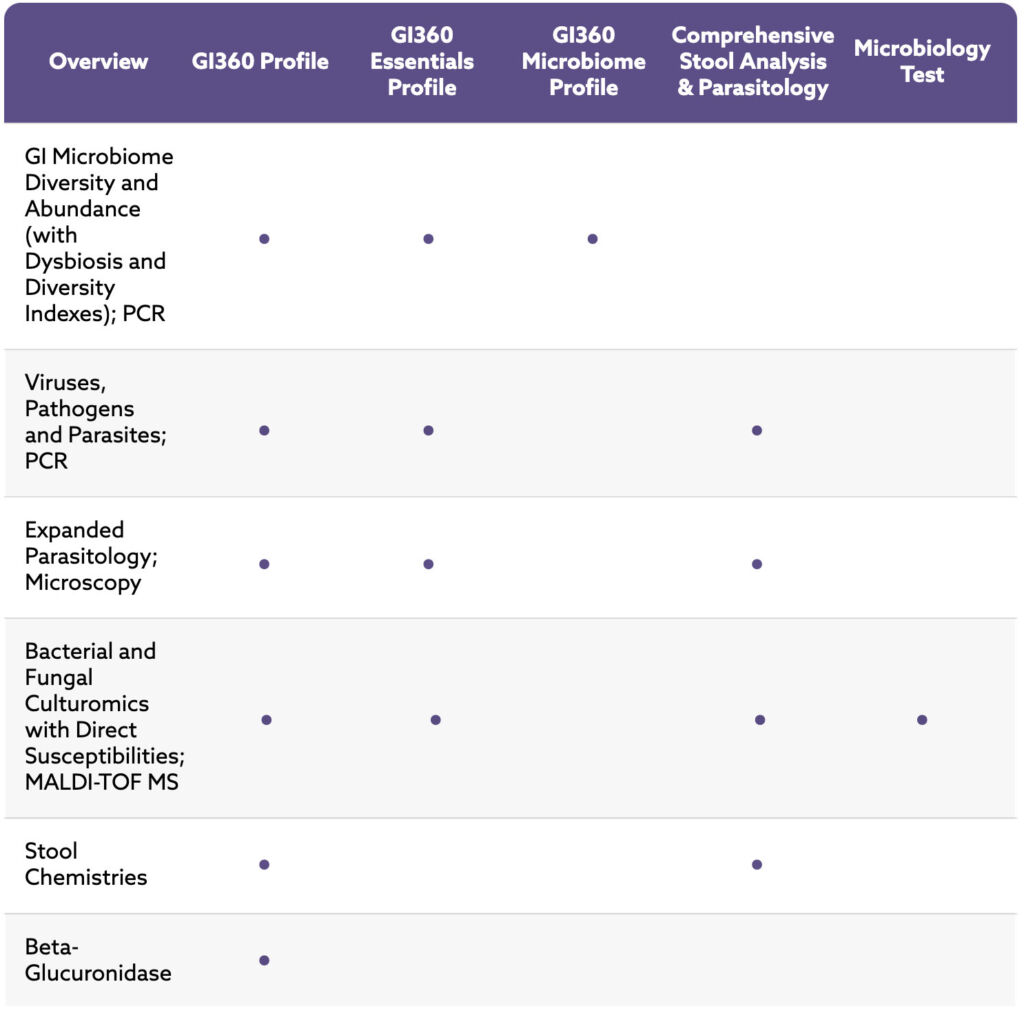
MosaicDX provides many options for stool analysis to meet every patient’s needs.
Learn more about our NEW GI360 Profiles