EU Message: This test is not available to persons established in the EU.
Reveal Your Genetic Capacity for Detoxification
DNA Signature – Toxins evaluates key genetic variations governing environmental toxin clearance, oxidative stress response, and essential methylation pathways.
By assessing interconnected functional networks rather than isolated variants, such as potential mismatches between Phase I activation and Phase II clearance, DNA Signature – Toxins maps your baseline biochemical resilience and pinpoints subtle metabolic bottlenecks. The report provides a clear blueprint of modifiable pathways, empowering practitioners to deliver targeted dietary, lifestyle, nutrient and additional testing interventions before environmental burden manifests as functional imbalance.
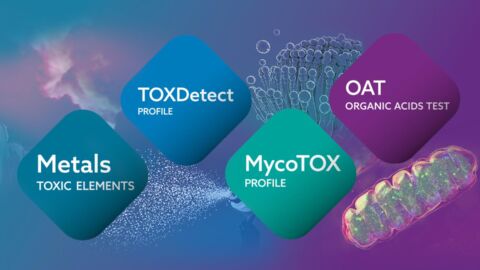
Designed as the genetic companion to MosaicDX TOXDetect Profile®, MycoTOX Profile®, and Heavy Metals Profiles
This comprehensive panel evaluates key genetic variations that govern your body’s ability to neutralize environmental toxins, manage oxidative stress, and drive essential methylation/detoxification pathways. By looking beyond isolated variants to assess interconnected functional networks, this panel provides a clear blueprint of your baseline biochemical resilience and potential metabolic bottlenecks.
Core Functional Domains Evaluated
Phase I & Phase II Detoxification Efficiency
Phase I Biotransformation (CYP Enzymes): Assesses the speed and efficiency with which Cytochrome P450 enzymes begin converting fat-soluble compounds into intermediate metabolites.
Phase II Conjugation Pathways: Evaluates critical clearance routes that neutralize reactive intermediate toxins, including Glucuronidation (UGT enzymes) and NAT2 activity (acetylation).
Glutathione System & Antioxidant Defense: Measures genetic propensity for Glutathione production and overall Phase II detox efficiency, as well as NRF2 activity, the master regulator of cellular defense against Oxidative Stress.
Environmental & Chemical Sensitivity Profile
Synthetic & Industrial Chemicals: Evaluates genetic clearance capacity and susceptibility to household and industrial compounds, including BPA, Phthalates, Pesticides, VOCs, Pesticides, and general Chemical Sensitivity.
Heavy Metals & Environmental Elements: Maps susceptibility and processing efficiency related to inorganic exposure risks, specifically Arsenic, Mercury, Lead, and Fluoride.
Folate & Methionine Cycles: Evaluates foundational enzyme activity driving one-carbon flux, including MTHFR, MTR, and MTRR.
Cellular Methylation Capacity: Assesses AHCY activity and overall choline need to support phospholipid synthesis, liver export, and alternative re-methylation routes.
Neuro-Metabolic Regulation: Evaluates COMT activity to understand how methylation throughput directly impacts catecholamine breakdown and neuro-chemical balance.
Our high-complexity laboratory is committed to delivering accurate and reliable results in coordination with these top licensure programs:
Analytes
From a single easy-to-collect buccal swab you will receive a personalized polygenic risk score for the following traits:
General Chemical Sensitivity
Benzene Risk
Pesticide Risk
BPA Risk
Phthalate Metabolism (CYP2B6)
Mold Metabolism (CYP1A2)
Mold Severity Risk
Arsenic Exposure Risk
Mercury Exposure Risk
Lead Exposure Risk
Fluoride Exposure Risk
CYPs
Glucuronidation Activity
NAT2 Activity
NRF2 Activity
Glutathione Level Propensity
Oxidative Stress
Phase II Detox Efficiency
MTHFR Activity
MTR
MTRR
COMT (Methylation)
AHCY
Choline Need
Sample Reports
The DNA Methylation Profile report aids clinical support for patients by pinpointing SNPs that could potentially impact health and disease risk.
MosaicDX offers patient-friendly sample collection kits that simplify testing. Our kits include visual, step-by-step instructions for test preparation and sample collection, personalized shipping cards, and pediatric collection bags if needed. With MosaicDX, patients can easily collect samples for testing with confidence and accuracy.
No, we do not. A genetic carrier refers to an individual who has inherited a recessive allele that has been shown to be responsible for an autosomal recessive disease or trait. A genetic carrier only has one recessive allele so while they do not show signs or symptoms of the trait or disease, they are able to pass along the recessive gene to their child. Our genetic testing is for screening purposes only to assess risk or predisposition for certain traits associated with health and wellness.
No. We do not use patient samples for further research or testing. We may use your de-identified and anonymized data to help improve our algorithm and reports. Your data will not be sold or shared to or with any 3rd parties/commercial interests.
Yes, we can delete the patient’s raw genetic sequence at any time. Please note that applicable federal and state laws require us to retain your patient report and the subset of your data that was used to generate that report for a specified period of time. We will be happy to delete any and all of your data that we are legally allowed to delete upon request. Please submit your request here.
We implement rigorous selection criteria when choosing which genes or SNPs to include in our panels. The selection and validation criteria are based upon peer-reviewed studies that show a significant association between the SNP variant and trait or condition, the magnitude of the odds ratio (OR) or hazard ratio (HR) to assess risk related to the variant, as well as the population or populations the gene and SNP variant were studied in, the population size, and replication of findings.
A genotype refers to the actual inherited genetic material of an individual that can influence or determine certain characteristics or traits. A phenotype is how the genotype is actually expressed, that is the observable or measurable characteristics or traits of an individual.
SNP is also called a Single Nucleotide Polymorphism. Your DNA consists of 4 main building blocks (nucleotides), Adenine (A), Thymine (T), Guanine (G), and Cytosine (C). In certain locations within your DNA, one person may have an A, whereas another may have a G. This difference in the base pair is often called a variant. This variant is an SNP.
In most situations, you do not have to resubmit a DNA buccal swab sample if you later want to order additional panels. The only time a new DNA buccal swab would need to be resubmitted is if the assay has had significant changes, or the patient previously requested that their DNA sequencing results be deleted.
Patients are sent a DNA Signature Collection Kit containing instructions, 1 cheek swab, a DNA Sample Envelope and a prepaid return envelope and biohazard zip-lock bag. Instructions can also be found on our website on the DNA Signature Profiles web page, along with an easy-to-follow video.
A person’s polygenic risk score is a statistical calculation based on the presence or absence of multiple genomic variants without taking environmental or other factors into account
Different states have regulations that define the scope of practice for practitioners. It is the practitioner’s responsibility to abide by these rules. Check with your state board of health to determine any restrictions related to laboratory testing. Please note, Mosaic Diagnostics does not offer testing in New York.
Once you have opened your account, you have the options of ordering kits to stock in your office or drop-ship kits directly to your patients through your MosaicDX portal.
Watch our short tutorial videos on how to conveniently
Schnakenberg E, Fabig KR, Stanulla M, et al.. A cross-sectional study of self-reported chemical-related sensitivity is associated with gene variants of drug-metabolizing enzymes. Environmental Health. 2007. doi:10.1186/1476-069X-6-6
Rösler TW, Salama M, Shalash AS, et al.. K-variant BCHE and pesticide exposure: Gene-environment interactions in a case-control study of Parkinson’s disease in Egypt. Scientific Reports. 2018. doi:10.1038/s41598-018-35003-4
Torres-Sánchez L, Gamboa R, Bassol-Mayagoitia S, et al.. Para-occupational exposure to pesticides, PON1 polymorphisms and hypothyroxinemia during the first half of pregnancy in women living in a Mexican floricultural area. Environmental Health: A Global Access Science Source. 2019. doi:10.1186/s12940-019-0470-x
Andersen HR, Wohlfahrt-Veje C, Dalgård C, et al.. Paraoxonase 1 Polymorphism and Prenatal Pesticide Exposure Associated with Adverse Cardiovascular Risk Profiles at School Age. PLoS ONE. 2012. doi:10.1371/journal.pone.0036830
Tawfik Khattab AM, Zayed AA, Ahmed AI, et al.. The role of PON1 and CYP2D6 genes in susceptibility to organophosphorus chronic intoxication in Egyptian patients. Neurotoxicology. 2016. doi:10.1016/j.neuro.2015.12.015
Lee CT, Wang JY, Chou KY, Hsu MI.. 1,25-Dihydroxyvitamin D3 modulates the effects of sublethal BPA on mitochondrial function via activating PI3K-Akt pathway and 17β-estradiol secretion in rat granulosa cells. Journal of Steroid Biochemistry and Molecular Biology. 2019. doi:10.1016/j.jsbmb.2018.09.002
Shatalova EG, Walther SE, Favorova OO, et al.. Genetic polymorphisms in human SULT1A1 and UGT1A1 genes associate with breast tumor characteristics: a case-series study. Breast Cancer Research. 2005. doi:10.1186/bcr1318
Long XD, Huang HD, Huang XY, Yao JG, Xia Q.. XPC codon 939 polymorphism is associated with susceptibility to DNA damage induced by aflatoxin B1 exposure. International Journal of Clinical and Experimental Medicine. 2015
Long XD, Ma Y, Zhou YF, Ma AM, Fu GH.. Polymorphism in xeroderma pigmentosum complementation group C codon 939 and aflatoxin B1-related hepatocellular carcinoma in the Guangxi population. Hepatology. 2010. doi:10.1002/hep.23807
Peng Q, Li S, Lao X, Chen Z, Li R, Qin X.. Association Between XPD Lys751Gln and Asp312Asn Polymorphisms and Hepatocellular Carcinoma Risk. Medicine (Baltimore). 2015
Long XD, Ma Y, Zhou YF, et al.. XPD codon 312 and 751 polymorphisms, and AFB1 exposure, and hepatocellular carcinoma risk. BMC Cancer. 2009. doi:10.1186/1471-2407-9-40
Yoshinari T, Yaguchi A, Takahashi-Ando N, et al.. Spiroethers of German chamomile inhibit production of aflatoxin G1 and trichothecene mycotoxin by inhibiting cytochrome P450 monooxygenases involved in their biosynthesis. FEMS Microbiology Letters. 2008. doi:10.1111/j.1574-6968.2008.01195.x
Reljic Z, Zlatovic M, Savic-Radojevic A, et al.. Is increased susceptibility to Balkan endemic nephropathy in carriers of common GSTA1 (*A/*B) polymorphism linked with the catalytic role of GSTA1 in ochratoxin A biotransformation? Serbian case control study and in silico analysis. Toxins. 2014. doi:10.3390/toxins6082348
Piacentini S, Polimanti R, Iorio A, et al.. GSTA1*-69C/T and GSTO2*N142D as asthma- and allergy-related risk factors in Italian adult patients. Clinical and Experimental Pharmacology and Physiology. 2014. doi:10.1111/1440-1681.12201
Long Xd, Ma Y, Wei Yp, Deng Zl.. Study on the detoxication gene gstM1-gstT1-null and susceptibility to aflatoxin B1 related hepatocellular carcinoma in Guangxi. Zhonghua Liu Xing Bing Xue Za Zhi. 2005
Yang X, Liu W, Lin H, et al.. Interaction Effects of AFB1 and MC-LR Co-exposure with Polymorphism of Metabolic Genes on Liver Damage: focusing on SLCO1B1 and GSTP1. Scientific Reports. 2017. doi:10.1038/s41598-017-16432-z
G JR, M OM, Rm CF, Ha BS.. Polymorphisms in GSTM1, GSTT1, GSTP1, and GSTM3 genes and breast cancer risk in northeastern Mexico. Genetics and Molecular Research. 2015. doi:10.4238/2015.June.11.22
Huang PC, Tsai EM, Li WF, et al.. Association between phthalate exposure and glutathione S-transferase M1 polymorphism in adenomyosis, leiomyoma and endometriosis. Human Reproduction. 2010. doi:10.1093/humrep/deq015
Woods JS, Heyer NJ, Echeverria D, et al.. Modification of neurobehavioral effects of mercury by a genetic polymorphism of coproporphyrinogen oxidase in children. Neurotoxicology and Teratology. 2012. doi:10.1016/j.ntt.2012.06.004
Valenzuela OL, Drobná Z, Hernández-Castellanos E, et al.. Association of AS3MT polymorphisms and the risk of premalignant arsenic skin lesions. Toxicology and Applied Pharmacology. 2009. doi:10.1016/j.taap.2009.06.007
Rodrigues EG, Kile M, Hoffman E, et al.. GSTO and AS3MT genetic polymorphisms and differences in urinary arsenic concentrations among residents in Bangladesh. Biomarkers. 2012. doi:10.3109/1354750X.2012.658863
García-Alvarado FJ, Neri-Meléndez H, Pérez Armendáriz L, Rivera Guillen M.. Polymorphisms of the Arsenite Methyltransferase (As3MT) gene and urinary efficiency of arsenic metabolism in a population in northern Mexico. Revista Peruana de Medicina Experimental y Salud Pública. 2018. doi:10.17843/rpmesp.2018.351.3565
Luo L, Li Y, Gao Y, et al.. Association between arsenic metabolism gene polymorphisms and arsenic-induced skin lesions in individuals exposed to high-dose inorganic arsenic in northwest China. Scientific Reports.
doi:10.1038/s41598-017-18925-3
Miraghaee SS, Sohrabi M, Jalili C, Bahrehmand F.. Assessment of GSTO1 (A140D) and GSTO2 (N142D) Gene Polymorphisms in Iranian Women with Polycystic Ovarian Syndrome. Reports of Biochemistry and Molecular Biology. 2020. doi:10.29252/rbmb.9.1.8
Steinmaus C, Moore LE, Shipp M, et al.. Genetic Polymorphisms in MTHFR 677 and 1298, GSTM1 and T1, and Metabolism of Arsenic. Journal of Toxicology and Environmental Health Part A. 2007. doi:10.1080/15287390600755240
Ahsan H, Chen Y, Kibriya MG, et al.. Arsenic Metabolism, Genetic Susceptibility, and Risk of Premalignant Skin Lesions in Bangladesh. Cancer Epidemiology, Biomarkers & Prevention. 2007. doi:10.1158/1055-9965.EPI-06-0676
Gundacker C, Wittmann KJ, Kukuckova M, et al.. Genetic background of lead and mercury metabolism in a group of medical students in Austria. Environmental Research. 2009. doi:10.1016/j.envres.2009.05.003
Custodio HM, Broberg K, Wennberg M, et al.. Polymorphisms in glutathione-related genes affect methylmercury retention. Archives of Environmental Health. 2004. doi:10.1080/00039890409603438
de Oliveira AÁS, de Souza MF, Lengert A van H, et al.. Genetic Polymorphisms in Glutathione (GSH-) Related Genes Affect the Plasmatic Hg/Whole Blood Hg Partitioning and the Distribution between Inorganic and Methylmercury Levels in Plasma Collected from a Fish-Eating Population. BioMed Research International. doi:10.1155/2014/940952
Barcelos GRM, Grotto D, de Marco KC, et al.. Polymorphisms in glutathione-related genes modify mercury concentrations and antioxidant status in subjects environmentally exposed to methylmercury. Total Environment. 2013. doi:10.1016/j.scitotenv.2013.06.029
Sowers MR, Wilson AL, Kardia SR, Chu J, McConnell DS.. CYP1A1 and CYP1B1 polymorphisms and their association with estradiol and estrogen metabolites in women who are premenopausal and perimenopausal. American Journal of Medicine. 2006. doi:10.1016/j.amjmed.2006.07.006
Kisselev P, Schunck WH, Roots I, Schwarz D.. Association of CYP1A1 Polymorphisms with Differential Metabolic Activation of 17β-Estradiol and Estrone. Cancer Research. 2005. doi:10.1158/0008-5472.CAN-04-3543
Schwarz D, Kisselev P, Schunck WH, Roots I.. Inhibition of 17β-estradiol activation by CYP1A1: genotype- and regioselective inhibition by St. John’s Wort and several natural polyphenols. Biochimica et Biophysica Acta. doi:10.1016/j.bbapap.2010.09.014
Eveillard A, Mselli-Lakhal L, Mogha A, et al.. Di-(2-ethylhexyl)-phthalate (DEHP) activates the constitutive androstane receptor (CAR): a novel signalling pathway sensitive to phthalates. Biochemical Pharmacology. doi:10.1016/j.bcp.2009.02.023
DeKeyser JG, Laurenzana EM, Peterson EC, et al.. Selective phthalate activation of naturally occurring human constitutive androstane receptor splice variants and the pregnane X receptor. Toxicological Sciences. 2011. doi:10.1093/toxsci/kfq394
Chen K, Guo R, Wei C.. Synonymous mutation rs2515641 affects CYP2E1 mRNA and protein expression and susceptibility to drug-induced liver injury. Pharmacogenomics. 2020. doi:10.2217/pgs-2019-0151
Rebbeck TR, Jaffe JM, Walker AH, et al.. Modification of clinical presentation of prostate tumors by a novel genetic variant in CYP3A4. Journal of the National Cancer Institute. 1998. doi:10.1093/jnci/90.16.1225
Amirimani B, Ning B, Deitz Ac., et al.. Increased transcriptional activity of the CYP3A4*1B promoter variant. Environmental and Molecular Mutagenesis. 2003. doi:10.1002/em.10199
CBS. Zhao Q, Zhang C, Li D, et al.. CBS gene polymorphism and promoter methylation-mediating effects on the efficacy of folate therapy in patients with hyperhomocysteinemia. Journal of Gene Medicine. 2020. doi:10.1002/jgm.3156
Justenhoven C.. Polymorphisms of Phase I and Phase II Enzymes and Breast Cancer Risk. Frontiers in Genetics. 2012. doi:10.3389/fgene.2012.00258
Oussalah A, Bosco P, Anello G, et al.. Exome-Wide Association Study Identifies New Low-Frequency and Rare UGT1A1 Coding Variants and UGT1A6 Coding Variants Influencing Serum Bilirubin in Elderly Subjects. Medicine (Baltimore). 2015. doi:10.1097/MD.0000000000000925
Tang W, Fu YP, Figueroa JD, et al.. Mapping of the UGT1A locus identifies an uncommon coding variant that affects mRNA expression and protects from bladder cancer. Human Molecular Genetics. 2012. doi:10.1093/hmg/ddr619
Kuypers DRJ, Naesens M, Vermeire S, Vanrenterghem Y.. The impact of uridine diphosphate-glucuronosyltransferase 1A9 (UGT1A9) gene promoter region single-nucleotide polymorphisms T-275A and C-2152T on early mycophenolic acid dose-interval exposure in de novo renal allograft recipients. Clinical Pharmacology and Therapeutics. 2005. doi:10.1016/j.clpt.2005.06.007
Qiu J, Du Z, Liu J, et al.. Association between polymorphisms in estrogen metabolism genes and breast cancer development in Chinese women. Medicine (Baltimore). 2018. doi:10.1097/MD.0000000000013337
Reding KW, Weiss NS, Chen C, et al.. Genetic polymorphisms in the catechol estrogen metabolism pathway and breast cancer risk. Cancer Epidemiology, Biomarkers & Prevention. 2009. doi:10.1158/1055-9965.EPI-08-0917
Farmohammadi A, Arab-Yarmohammadi V, Ramzanpour R.. Association analysis of rs1695 and rs1138272 variations in GSTP1 gene and breast cancer susceptibility. Asian Pacific Journal of Cancer Prevention. 2020. doi:10.31557/APJCP.2020.21.4.1167
Wu J, Wang W, Liu Y, et al.. Modifying Role of GSTP1 Polymorphism on the Association between Tea Fluoride Exposure and the Brick-Tea Type Fluorosis. PLoS ONE. 2015. doi:10.1371/journal.pone.0128280
Wang IJ, Karmaus WJJ.. Oxidative Stress-Related Genetic Variants May Modify Associations of Phthalate Exposures with Asthma. International Journal of Environmental Research and Public Health. 2017. doi:10.3390/ijerph14020162